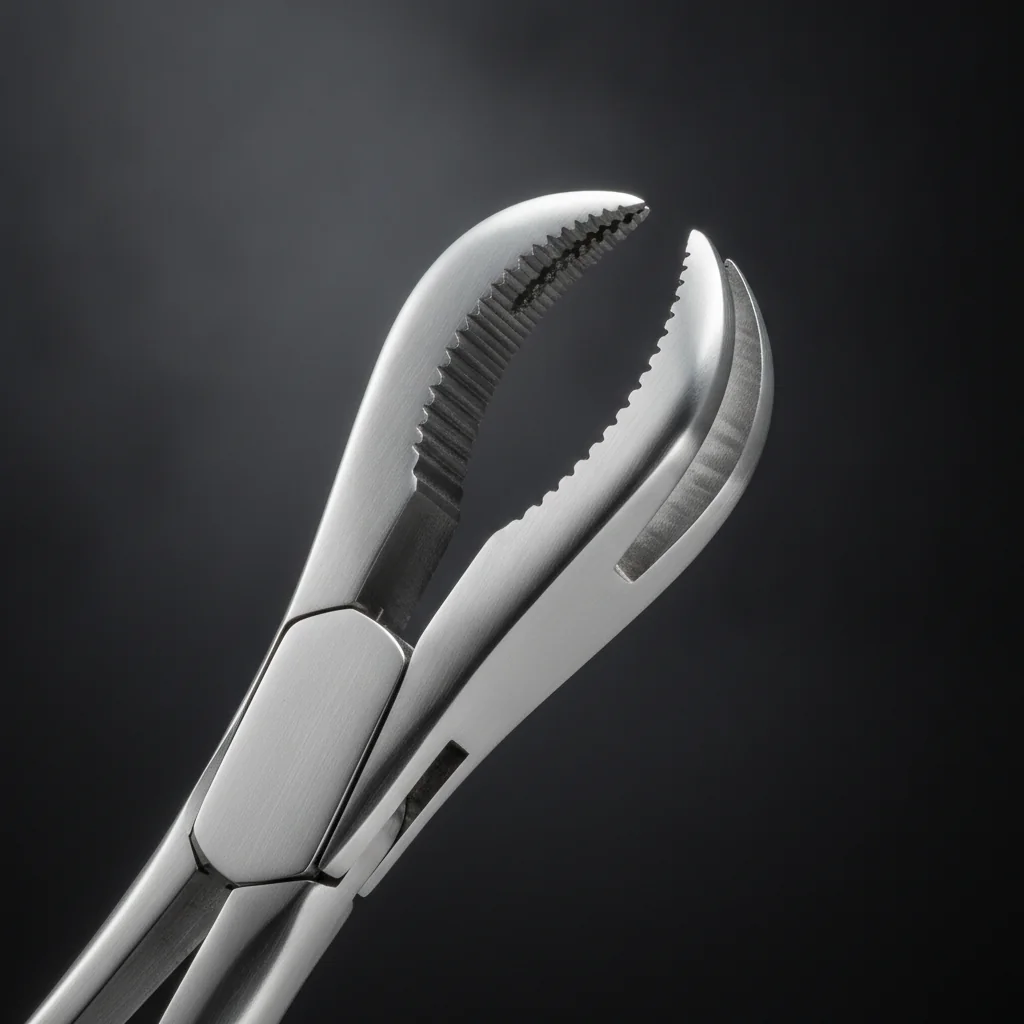
Tail Dockers — Pattern and Clinical Use
Docking is performed to reduce faecal soiling and the associated blowfly strike risk in sheep. Instruments fall into two groups: cutting dockers that sever the tail directly, and heated or crushing patterns that seal the tissue as they cut to control bleeding. Method and permitted age are regulated in many jurisdictions, so buyers should confirm local rules before specifying a pattern.
Where a cutting docker is used, blade sharpness determines how clean the cut is and therefore how well it heals. Gas or electrically heated patterns cauterise as they cut, which controls haemorrhage but requires consistent blade temperature.
Tail Dockers Variants and Specifications
Standard docking instrument types.
| Type | Application |
|---|---|
| Cutting docker | Direct severance; clean blade required |
| Gas-heated docker | Cauterises as it cuts |
| Electric docking iron | Consistent controlled blade temperature |
| Elastrator ring method | Bloodless; uses rubber rings |
| Lamb pattern | Scaled for small stock |
| Replaceable blade | Restores a clean cutting edge |
Material, Finish and Quality Control
We forge tail dockers from AISI 420 martensitic stainless. Cutting edges are honed and tested, and heated patterns are checked for even blade temperature so the cut cauterises uniformly. Each batch passes Rockwell hardness testing, dimensional checks on edge keenness and heat uniformity, and visual inspection under our ISO 13485 system before passivation and final finishing. Mirror and satin finishes are both available — satin is usually specified where glare under operating lights is a concern.
Who Sources Tail Dockers From Surgical Star
Tail dockers sell to sheep producers through livestock merchants, with strong seasonal demand around lambing. Elastrator rings serve the same purpose as a bloodless alternative.
OEM, Certification and Ordering
Every tail dockers can be produced as a private-label line: your logo laser-marked on the handle, your catalog numbers, and your own printed packaging, manufactured from your drawings or a reference sample. Our quality file is ISO 13485, our EU route is CE marking under MDR 2017/745, and our facility holds US FDA establishment registration. Conformity and ASTM F899 material certificates are issued against each order.
You order direct from the factory with no trading-house margin, on volume-tiered pricing and a minimum matched to your pattern and finish. Once your branded sample is signed off, expect roughly four to six weeks to bulk delivery, worldwide DDP. See how OEM & private label works →
Related Veterinary Instruments
Frequently Asked Questions
What methods are used for docking?
Cutting dockers sever directly, heated patterns cauterise as they cut to control bleeding, and elastrator rings provide a bloodless alternative.
Is docking regulated?
Method and permitted age are regulated in many jurisdictions. Buyers should confirm local rules before specifying a pattern.
Why use a heated docker?
It cauterises the cut as it is made, which controls haemorrhage. Consistent blade temperature is what makes that reliable.
Can you manufacture these under our own brand?
Yes — full OEM and private label. We laser-mark your logo and catalog numbers, pack in your branded boxes, and work from your drawings, tech pack or a reference sample, with a pre-production sample approved before any bulk run.
Send your pattern list, drawing or a reference sample and we’ll quote MOQ, pricing and lead time — standard catalog or fully private-label.
Request a Free Quote Order a Sample