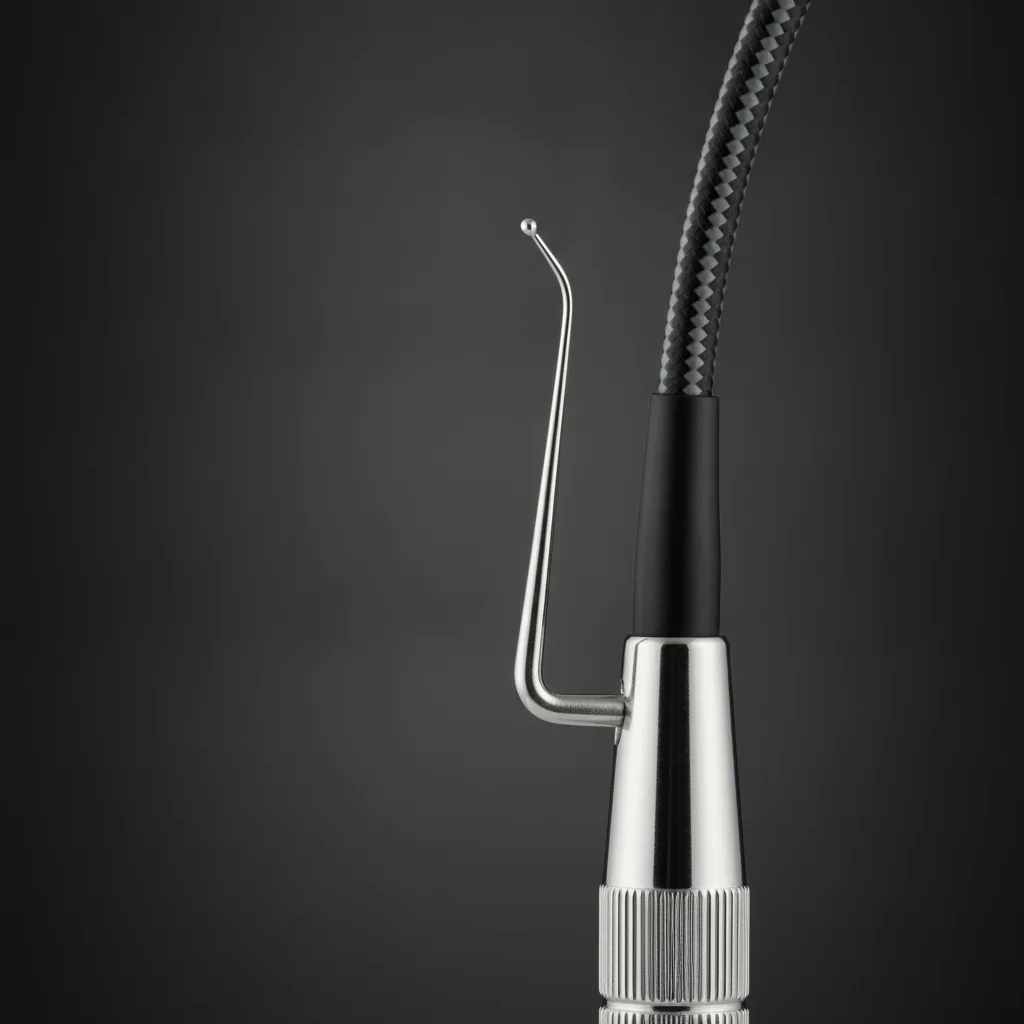
Cautery Electrodes — Pattern and Clinical Use
Electrode geometry shapes the electrical effect. A blade concentrates current along an edge for cutting, a needle concentrates it at a point for fine precision work, a ball spreads it for surface coagulation, and a loop shaves tissue while coagulating the base. Surgeons change electrodes during a procedure to match the tissue effect required.
Coated electrodes resist eschar build-up, which otherwise insulates the tip and progressively degrades performance during a long case. Shank diameter must match the pencil collet — commonly 2.36 mm as the standard fitting.
Cautery Electrodes Variants and Specifications
Standard electrode shapes.
| Shape | Typical use |
|---|---|
| Blade | Cutting along an edge |
| Needle | Fine precision cutting and fulguration |
| Ball | Surface coagulation |
| Loop | Shaving with base coagulation |
| Extended / long shank | Deep cavity access |
| Non-stick coated | Resists eschar build-up |
Material, Finish and Quality Control
We forge Cautery electrodes from 316L austenitic stainless. Shank diameter is gauged to the standard collet fitting and coating adhesion verified, since a loose electrode arcs at the collet. Each batch passes Rockwell hardness testing, dimensional checks on shank fitting and coating adhesion, and visual inspection under our ISO 13485 system before passivation and final finishing. Mirror and satin finishes are both available — satin is usually specified where glare under operating lights is a concern.
Who Sources Cautery Electrodes From Surgical Star
Cautery electrodes are a recurring consumable across every surgical specialty using diathermy, giving strong repeat revenue behind an initial pencil sale.
OEM, Certification and Ordering
Every Cautery electrodes can be produced as a private-label line: your logo laser-marked on the shank, your catalog numbers, and your own printed packaging, manufactured from your drawings or a reference sample. Manufactured under an ISO 13485 quality system, CE-marked to EU MDR 2017/745 and covered by US FDA establishment registration. A certificate of conformity and an ASTM F899 material certificate for the exact steel grade ship with your order.
MOQs are low and new-brand friendly, and vary with pattern, finish and branding. Pricing is direct from the factory and tiered by volume. After you approve a branded pre-production sample, bulk production typically runs four to six weeks and ships worldwide DDP with HS codes handled. See how OEM & private label works →
Related Electrosurgery Instruments
Frequently Asked Questions
Which electrode shape for cutting?
A blade concentrates current along an edge for cutting. Needles give finer precision, balls spread current for surface coagulation, loops shave and coagulate together.
Why do coated electrodes cost more?
The coating resists eschar build-up, which otherwise insulates the tip and progressively degrades performance through a long case.
Do electrodes fit all pencils?
Shank diameter must match the pencil collet — 2.36 mm is the common standard, but compatibility should be confirmed.
Can you manufacture these under our own brand?
Yes — full OEM and private label. We laser-mark your logo and catalog numbers, pack in your branded boxes, and work from your drawings, tech pack or a reference sample, with a pre-production sample approved before any bulk run.
Send your pattern list, drawing or a reference sample and we’ll quote MOQ, pricing and lead time — standard catalog or fully private-label.
Request a Free Quote Order a Sample