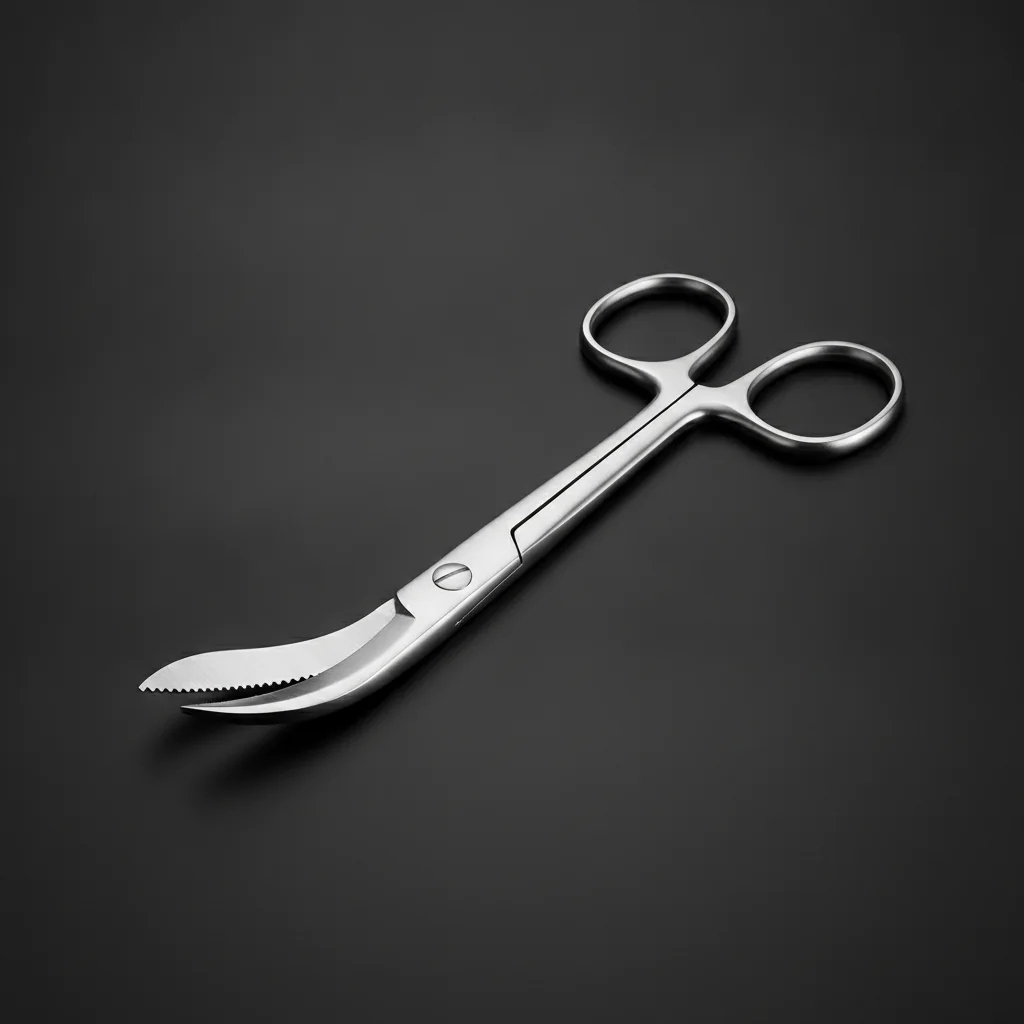
Plaster Shears — Pattern and Clinical Use
Cutting a cast off means passing a blade between the cast and the patient’s skin, which is why the lower blade is blunt and angled — it slides safely along the limb while the upper blade shears the cast material. The angle between handle and blade keeps the operator’s hand clear and gives the leverage needed to cut through plaster or fibreglass.
Fibreglass casting tape is considerably tougher on an edge than plaster of Paris, so buyers cutting synthetic casts should specify hardened or serrated blades. The blunt tip must be genuinely smooth, since it runs against skin.
Plaster Shears Variants and Specifications
Standard plaster shear patterns.
| Variant | Specification / use |
|---|---|
| Bohler pattern | Classic angled plaster shears |
| Stille pattern | Heavy compound-action shears |
| Serrated blade | Grips fibreglass casting tape |
| Blunt lower tip | Slides safely against skin |
| Angled handle | Leverage and hand clearance |
| 23–37 cm lengths | Matched to cast thickness |
Material, Finish and Quality Control
We forge Plaster Shears from AISI 420 martensitic stainless. The blunt tip is polished and radiused, and blade hardness checked against fibreglass casting material rather than plaster alone. Each batch passes Rockwell hardness testing, dimensional checks on blunt tip radius and blade hardness, and visual inspection under our ISO 13485 system before passivation and final finishing. Mirror and satin finishes are both available — satin is usually specified where glare under operating lights is a concern.
Who Sources Plaster Shears From Surgical Star
Plaster shears sell to orthopedic, fracture clinic and emergency department suppliers, alongside cast spreaders and saws as a cast-removal group.
OEM, Certification and Ordering
Every Plaster Shears can be produced as a private-label line: your logo laser-marked on the handle, your catalog numbers, and your own printed packaging, manufactured from your drawings or a reference sample. Our quality file is ISO 13485, our EU route is CE marking under MDR 2017/745, and our facility holds US FDA establishment registration. Conformity and ASTM F899 material certificates are issued against each order.
You order direct from the factory with no trading-house margin, on volume-tiered pricing and a minimum matched to your pattern and finish. Once your branded sample is signed off, expect roughly four to six weeks to bulk delivery, worldwide DDP. See how OEM & private label works →
Related Orthopedic Instruments
Frequently Asked Questions
Why is one blade blunt?
It slides between the cast and the skin without cutting the patient, while the upper blade shears the cast material.
Do fibreglass casts need different shears?
They are much tougher on an edge than plaster of Paris, so hardened or serrated blades should be specified where synthetic casts are used.
What length should we stock?
Longer patterns give more leverage for thick casts; shorter ones offer more control. Fracture clinics typically carry both.
Can you manufacture these under our own brand?
Yes — full OEM and private label. We laser-mark your logo and catalog numbers, pack in your branded boxes, and work from your drawings, tech pack or a reference sample, with a pre-production sample approved before any bulk run.
Send your pattern list, drawing or a reference sample and we’ll quote MOQ, pricing and lead time — standard catalog or fully private-label.
Request a Free Quote Order a Sample