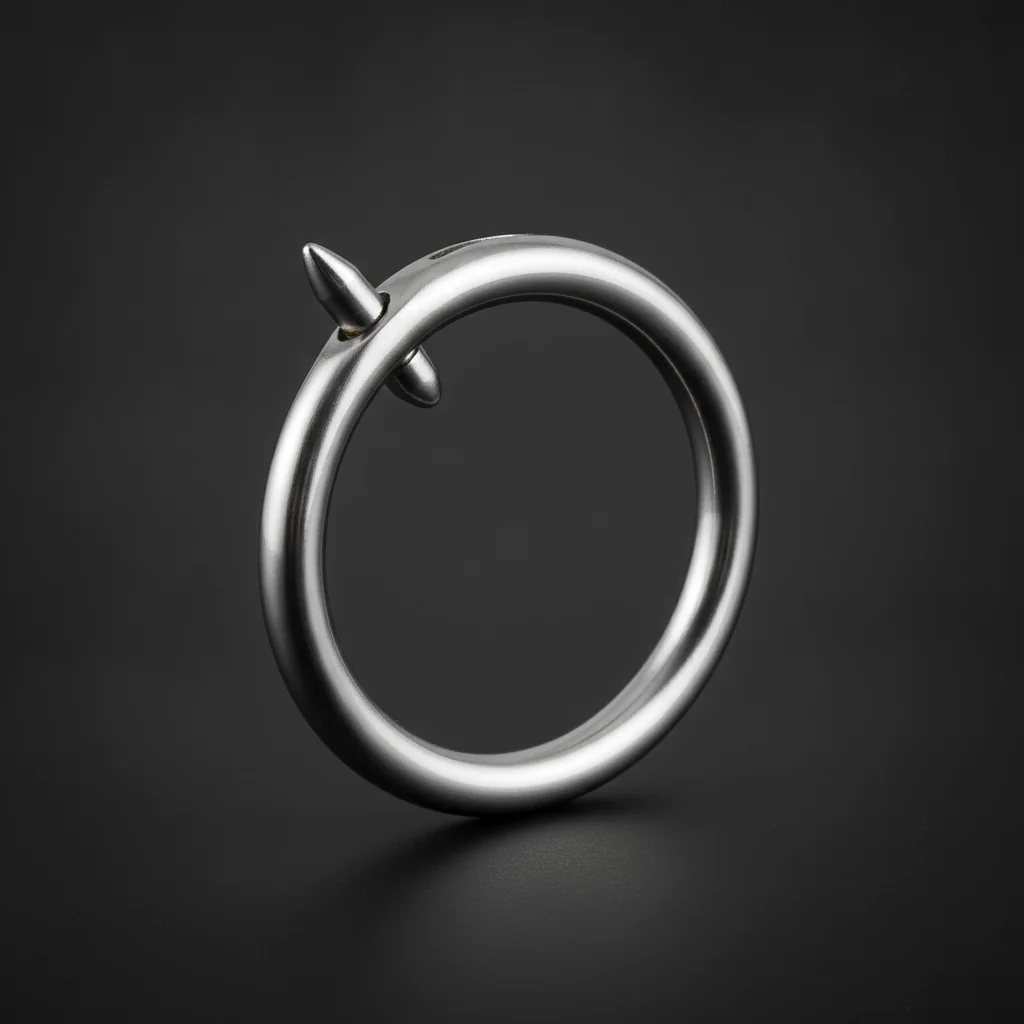
Cattle Nose Rings — Pattern and Clinical Use
A bull is handled by a lead attached to a nose ring, because pressure on the sensitive septum gives a handler control that halter pressure alone cannot. The ring is fitted through a punched septum and closed permanently, so it must close flush with no protruding edge — a ring that does not close cleanly causes chronic irritation and can be torn out.
Rings are supplied self-piercing or for use with a separate punch. Closure quality is the critical characteristic: the two halves must meet flush and the securing screw must sit flat and stay tight for the working life of the animal.
Cattle Nose Rings Variants and Specifications
Standard nose ring sizes and types.
| Variant | Specification / use |
|---|---|
| Self-piercing | Fitted without a separate punch |
| Non-piercing (punched septum) | Fitted after punching |
| Copper | Traditional; softer on tissue |
| 316L stainless | Maximum corrosion resistance |
| 50–80 mm diameters | Sized by animal age and breed |
| Bull lead / nose ring holder | Handling accessory |
Material, Finish and Quality Control
We forge cattle nose rings from 316L austenitic stainless. Ring halves are checked to close flush with the securing screw seated flat, since a protruding edge causes chronic irritation. Each batch passes Rockwell hardness testing, dimensional checks on flush closure and screw seating, and visual inspection under our ISO 13485 system before passivation and final finishing. Mirror and satin finishes are both available — satin is usually specified where glare under operating lights is a concern.
Who Sources Cattle Nose Rings From Surgical Star
Nose rings sell to cattle producers and livestock merchants, particularly in beef and dairy breeding operations, and are ordered by diameter according to animal age.
OEM, Certification and Ordering
Every cattle nose rings can be produced as a private-label line: your logo laser-marked on the ring, your catalog numbers, and your own printed packaging, manufactured from your drawings or a reference sample. Manufactured under an ISO 13485 quality system, CE-marked to EU MDR 2017/745 and covered by US FDA establishment registration. A certificate of conformity and an ASTM F899 material certificate for the exact steel grade ship with your order.
MOQs are low and new-brand friendly, and vary with pattern, finish and branding. Pricing is direct from the factory and tiered by volume. After you approve a branded pre-production sample, bulk production typically runs four to six weeks and ships worldwide DDP with HS codes handled. See how OEM & private label works →
Related Veterinary Instruments
Frequently Asked Questions
Why do bulls need nose rings?
Pressure on the sensitive nasal septum gives handlers a degree of control that a halter alone does not, which is a safety measure for the people working with the animal.
Copper or stainless?
Copper is traditional and softer against tissue; 316L stainless gives maximum corrosion resistance. Both are in common use.
What size ring is needed?
Diameter is chosen by animal age and breed, typically in the 50–80 mm range, with larger rings for mature bulls.
Can you manufacture these under our own brand?
Yes — full OEM and private label. We laser-mark your logo and catalog numbers, pack in your branded boxes, and work from your drawings, tech pack or a reference sample, with a pre-production sample approved before any bulk run.
Send your pattern list, drawing or a reference sample and we’ll quote MOQ, pricing and lead time — standard catalog or fully private-label.
Request a Free Quote Order a Sample