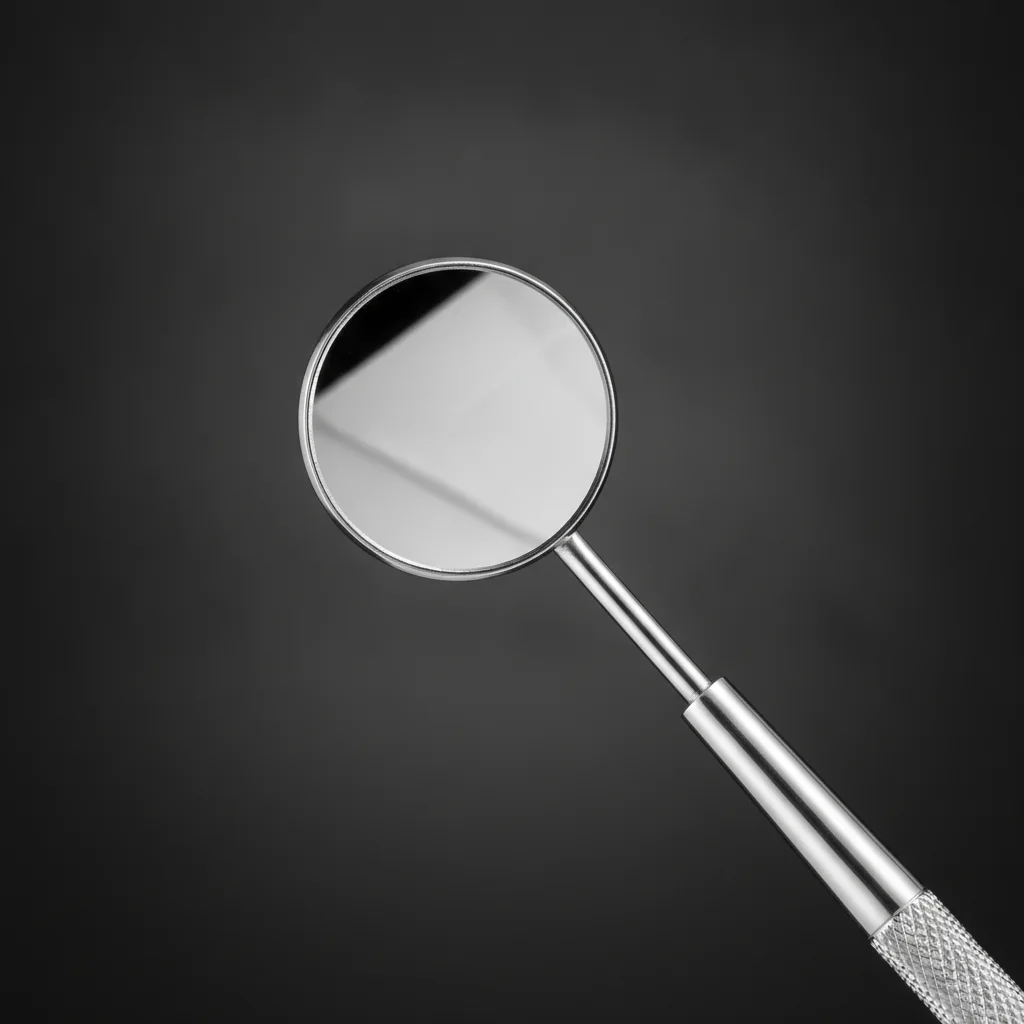
Laryngeal Mirrors — Pattern and Clinical Use
Indirect laryngoscopy uses a warmed mirror placed against the soft palate to reflect an image of the larynx back to the examiner. The mirror must be warmed to prevent condensation, angled correctly to catch the light, and small enough not to trigger gagging. Head diameter is chosen for the patient — larger heads give a better view but are less well tolerated.
Mirror heads are numbered by diameter and mount on standard threaded handles, so heads are replaced independently. Silvering quality and the seal at the rim determine how long a head survives repeated warming and autoclaving.
Laryngeal Mirrors Variants and Specifications
Standard mirror head sizes.
| Head size | Typical use |
|---|---|
| No. 2 / No. 3 (12–16 mm) | Paediatric and sensitive patients |
| No. 4 / No. 5 (18–22 mm) | General adult laryngoscopy |
| No. 6 / No. 8 (24–28 mm) | Wider view where tolerated |
| Postnasal (small, reversed angle) | Nasopharyngeal examination |
| Threaded cone-socket handle | Heads replaceable |
| Rhodium coating | Durable bright reflective surface |
Material, Finish and Quality Control
We forge laryngeal mirrors from 316L austenitic stainless. Rim sealing and coating adhesion are checked, because repeated warming and autoclaving is what causes mirror heads to delaminate. Each batch passes Rockwell hardness testing, dimensional checks on rim seal and coating adhesion, and visual inspection under our ISO 13485 system before passivation and final finishing. Mirror and satin finishes are both available — satin is usually specified where glare under operating lights is a concern.
Who Sources Laryngeal Mirrors From Surgical Star
Laryngeal mirrors sell to ENT clinics as graduated head sets with replaceable heads, giving a consumable reorder stream alongside the handles.
OEM, Certification and Ordering
Every laryngeal mirrors can be produced as a private-label line: your logo laser-marked on the handle, your catalog numbers, and your own printed packaging, manufactured from your drawings or a reference sample. Manufactured under an ISO 13485 quality system, CE-marked to EU MDR 2017/745 and covered by US FDA establishment registration. A certificate of conformity and an ASTM F899 material certificate for the exact steel grade ship with your order.
MOQs are low and new-brand friendly, and vary with pattern, finish and branding. Pricing is direct from the factory and tiered by volume. After you approve a branded pre-production sample, bulk production typically runs four to six weeks and ships worldwide DDP with HS codes handled. See how OEM & private label works →
Related ENT Instruments
Frequently Asked Questions
Why are laryngeal mirrors warmed before use?
To prevent the patient’s breath condensing on the surface and obscuring the view. Warming is a standard part of the technique.
What head size should be used?
Larger heads give a better view but are less well tolerated. Nos. 4 and 5 suit most adults, with smaller heads for paediatric and sensitive patients.
Are heads replaceable?
Yes, they mount on standard threaded handles, so heads are reordered independently as coatings wear.
Can you manufacture these under our own brand?
Yes — full OEM and private label. We laser-mark your logo and catalog numbers, pack in your branded boxes, and work from your drawings, tech pack or a reference sample, with a pre-production sample approved before any bulk run.
Send your pattern list, drawing or a reference sample and we’ll quote MOQ, pricing and lead time — standard catalog or fully private-label.
Request a Free Quote Order a Sample